< Blogs

How to Prepare for Black Friday & Cyber Monday: A Complete Guide for Dropshippers

Vivan Z.
Created on November 21, 2025 – Last updated on November 21, 20254 min read
Written by: Vivan Z.

How to Prepare for Black Friday & Cyber Monday: A Complete Guide for Dropshippers

Whether you’re scaling your store or planning your first major sales push, the way you prepare in early November will determine your conversion rate, AOV, and overall profit.At DropSure, we’ve helped thousands of sellers get ready for peak season. Here’s a complete checklist to ensure your store is fully prepared for Black Friday and Cyber Monday.


  1. Optimize Your Winning Products Early

Don’t wait until the last week of November to choose your hero products.

  • Look for:High demand + low competition
  • Evergreen gifts (pet products, home gadgets, self-care)
  • Fast shipping & stable inventory
  • High margins or strong upsell potential


Focus on 3–5 main offers for your BFCM promotions.

  • Then polish them with:Optimized titles
  • Strong benefit-driven descriptions
  • Clear product videos
  • High-converting images


DropSure users can import products with one click and update product details directly inside the backend — saving days of manual editing.


  1. Build Your BFCM Offer Stack

Discount is just one piece of the puzzle. The sellers who crush BFCM use a full offer stack:

  • Sitewide discount (10–25%)
  • BOGO or bundle offer
  • Free shipping threshold
  • Free gift for orders above a certain amount
  • Flash sale products with countdown timers


Your offer should pull customers toward higher AOV — not just lower prices.


  1. Prepare Your Store Pages

A clean, fast, trustworthy store converts better during BFCM traffic spikes.

Check these items:

  • Page speed optimized (especially on mobile)
  • Simple navigation
  • Product page CTA placed above the fold
  • Trust badges, reviews, UGC visible
  • Clear shipping & return policies


Add a Black Friday landing page so customers instantly know there’s a sale going on.
 

  1. Strengthen Your Checkout & AOV Boosters

During BFCM, your checkout must be clean and friction-free.

Must-have improvements:

  • One-click upsells
  • Cart add-ons
  • Bundle recommendations
  • Automatic discount applied at checkout
  • Multiple payment options


Even a small AOV increase (e.g., $3–$5) makes a huge difference during peak volume.


  1. Start Warm-Up Marketing Before the Sale

Don’t wait until Black Friday to activate your audience.

Warm-up ideas:

  • Email: “Black Friday Is Coming — Get Early Access”
  • SMS: VIP early-bird offer
  • Retargeting ads (video or carousel)
  • Social countdown posts
  • Collecting emails via a BFCM waitlist page


When the sale starts, these warmed-up users convert much faster.
 

  1. Prepare Inventory & Shipping — Avoid Delays

BFCM traffic can overwhelm logistics. Choose reliable fulfillment.

For DropSure sellers, this means:

  • Pre-checking inventory levels
  • Using fast shipping routes
  • Confirming warehouse processing time
  • Tracking automatically synced to your store


A slow supplier can ruin an entire BFCM campaign.

A reliable one helps you scale smoothly.


  1. Make Customer Service Ready

Expect more:

  • Pre-sale questions
  • Order edits
  • Shipping requests
  • Gift returns
  • Stock inquiries

Prepare:

  • FAQ updates
  • Auto-replies
  • Quick templates
  • Clear delivery time messaging


Fast customer support increases conversion and decreases refund rates.


  1. Track and Optimize in Real Time

Don’t wait until the end of Black Friday to make decisions.

Monitor:

  • Product performance
  • Add-to-cart rate
  • Checkout drop-off
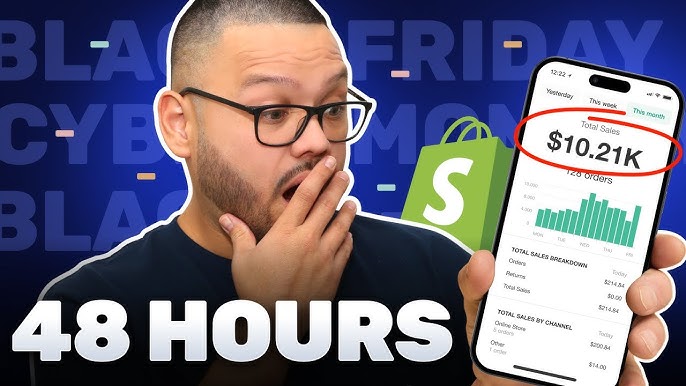
  • ROAS (if running ads)
  • Inventory levels


Kill slow products early and push budget toward winners.


Black Friday and Cyber Monday (BFCM) are the biggest revenue opportunities of the year for eCommerce sellers — and for dropshippers, preparation is everything.

Final Thoughts

Black Friday and Cyber Monday favor sellers who prepare early, optimize often, and move fast.

Dropshippers who win BFCM usually have:

  • Winning products selected early
  • High-impact offers
  • Optimized store pages
  • Strong logistics and support
  • Warmed-up customer audiences


If you want your BFCM results to be your strongest ever, preparation starts today.
DropSure is Your Best Partner
22 Years Experience
Affiliate Rebates
100% Quality Guarantee
Top-Up Rewards
10+ Global Warehouses
Custom Branding Support
Smart inventory System
24/7 Customer Support
Get a Quote in 24 Hours
Start Sourcing for Free

Keep Learning

Are you thinking about starting an online business but feel stressed over renting warehouses, stocking products, and spending a lot of money upfront? Don’t worry, there’s a solution called dropshipping. It’s perfect for beginners! With this model, you won’t need to worry about inventory or making big investments. You can easily start your business without the hassle. What is Dropshipping? Dropshipping is a popular fulfillment method for cross-border sellers. It’s a straightforward process: sellers showcase products on their website, and once an order is placed, they buy the item from a supplier who ships it directly to the customer.This efficient model allows sellers to avoid the hassle of managing inventory while offering a seamless shopping experience to their customers.The diagram below clearly illustrates this process. Although dropshipping has been around for less than a decade, it has grown rapidly. This is clearly reflected in the stock price growth of Shopify. In May 2015, Shopify’s stock price was less than $30, but by its peak in February 2020, it had skyrocketed to an astonishing $531.22. In less than five years, the stock price surged nearly 19 times—an incredible leap! From Shopify’s stock price growth chart, it’s clear that dropshipping has been booming in recent years. Dropshipping mainly involves three parties: the customer, the dropshipper, and the suppliers. Let’s focus on introducing the two roles that might be less familiar—dropshippers and dropshipping suppliers. What is a Dropshipper? A dropshipper is an individual or business engaged in dropshipping operations. In the dropshipping business model, the dropshipper runs an online store. When a customer places an order, the dropshipper forwards the order details to a supplier, who then ships the product directly to the […]

Introduction: The Illusion of the “Winning Product” Every week, a new “must-sell” product floods entrepreneur communities. A viral gadget.A clever home accessory.A beauty tool everyone claims is printing money. Screenshots circulate showing massive revenue numbers. Influencers promise effortless scaling. Product research tools highlight explosive growth curves. Suddenly, thousands of sellers launch identical campaigns within days. And then reality arrives. Ad costs skyrocket. Conversion rates collapse. Margins disappear. What looked like a guaranteed success becomes an expensive lesson. If you’ve ever wondered why a product that seemed unstoppable ends up draining your advertising budget, the answer is simple: The problem is rarely the product itself — it’s the way trends are misunderstood and executed inside Facebook’s advertising ecosystem. This article breaks down the real mechanics behind failed “hot product” campaigns and explains how successful advertisers think differently. The Myth of Copy-Paste Success Many beginners assume success works like this: Find trending product Copy competitor ads Launch Facebook campaign Scale quickly In theory, it sounds logical. In practice, it almost never works. Why? Because by the time you discover a trending product, you are already late. Trend Timing Is Invisible What you see publicly is the peak, not the beginning. Successful advertisers usually test products weeks or months before they become visible trends. Early adopters benefit from: Lower CPM (cost per thousand impressions) Less audience fatigue Algorithm learning advantages Untapped customer curiosity When trend data tools show rapid growth, saturation has often already begun. You are entering during competition, not discovery. Facebook Ads Is an Auction, Not a Billboard One of the biggest misunderstandings is treating Facebook Ads like traditional advertising. Facebook operates as a real-time auction system. Every impression involves advertisers […]

Should I focus on high-profit products or high-volume products? At first glance, the answer seems obvious. High margins sound attractive, while high sales volume feels safer. But in reality, dropshipping success rarely comes from choosing one extreme over the other. The most sustainable stores are built by sellers who understand how to balance profit margins and sales volume—and how that balance shifts depending on product type, traffic source, and business stage. This article breaks down the real economics behind dropshipping products, explains why many stores fail despite “good margins,” and shows how to select products that can scale without destroying cash flow, ad performance, or operational stability. 1. Understanding the Two Forces That Drive Dropshipping Revenue 1.1 Profit Margin: What You Earn Per Order Profit margin is usually calculated as: (Selling Price – Product Cost – Shipping – Transaction Fees – Ad Cost) = Net Profit High-margin products: Leave more room for advertising Absorb returns and refunds more easily Require fewer orders to be profitable But they often face higher resistance to purchase. 1.2 Sales Volume: How Many Orders You Generate Sales volume is driven by: Market demand Price sensitivity Ease of understanding the product Impulse-buy potential High-volume products: Move fast Generate social proof quickly Help stores look “alive” But they can suffer from thin margins and operational pressure. 2. Why Chasing Only High Margins Often Fails 2.1 The High-Margin Illusion Many beginners believe: “If I make $40 per sale, I only need a few orders a day.” In practice: High-margin products usually require stronger branding Conversion rates are lower Customer trust becomes a bigger barrier Without brand authority, expensive products are hard to scale. 2.2 Higher Prices Mean Higher […]

Recommended for you