














 En
En
 10 min read
The dropshipping business model has reshaped global e-commerce by lowering the barrier to entry for entrepreneurs. For years, anyone with an online store and reliable suppliers could sell products worldwide without holding inventory or managing logistics.
But the next evolution of dropshipping is already underway.
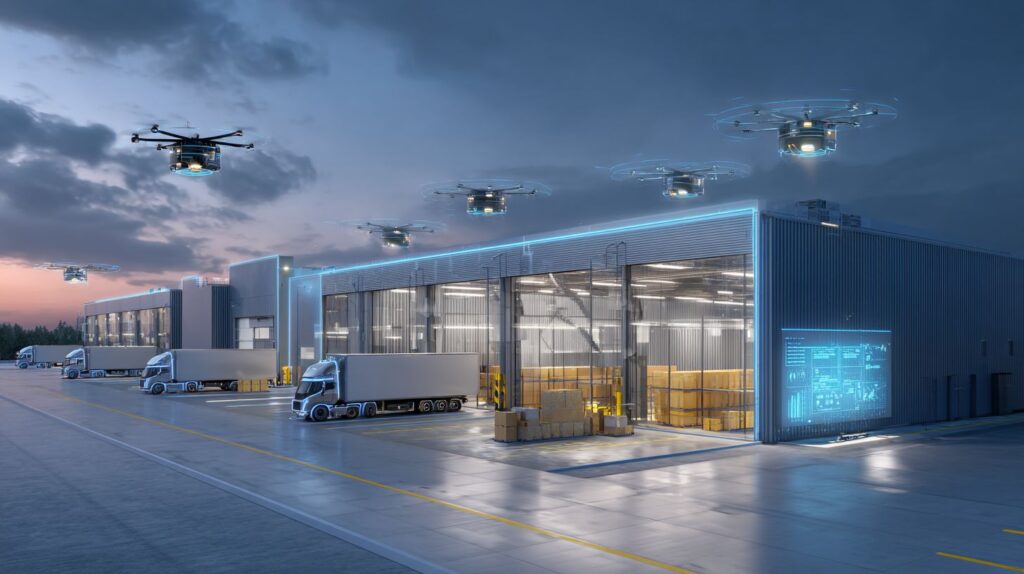
Advances in smart warehousing, artificial intelligence, robotics, and autonomous delivery systems are redefining how products move from manufacturers to customers. What once relied heavily on manual processes, fragmented logistics networks, and long shipping times is rapidly becoming automated, predictive, and data-driven.
These changes are not just improving efficiency — they are fundamentally transforming how one-piece fulfillment operates, how online stores compete, and what customers expect from modern e-commerce.
In this article, we explore how intelligent warehouses and unmanned delivery technologies are reshaping the future of dropshipping, what opportunities they create, and how sellers can adapt before the industry shifts completely.
The Evolution of Dropshipping: From Manual Fulfillment to Intelligent Logistics
Traditional dropshipping worked because it separated sales from inventory ownership.
A typical process looked like this:
-
A customer places an order online.
-
The seller forwards the order to a supplier.
-
The supplier packages and ships the product directly.
-
The customer receives the item days or weeks later.
This model enabled rapid business launches but introduced several limitations:
-
Slow shipping times
-
Limited quality control
-
Inventory uncertainty
-
Poor tracking transparency
-
High dependency on overseas suppliers
As e-commerce matured, customer expectations changed dramatically. Fast shipping became standard, real-time tracking became normal, and reliability became a competitive requirement rather than a bonus.
The old logistics structure began showing cracks.
Smart warehousing emerged as the solution.
What Is Smart Warehousing?
Smart warehousing refers to storage and fulfillment centers powered by automation technologies, connected software systems, and real-time data analytics.
Unlike traditional warehouses staffed primarily by manual labor, intelligent warehouses rely on:
-
Robotics and automated picking systems
-
AI-driven inventory forecasting
-
IoT sensors
-
Machine vision systems
-
Cloud-based logistics platforms
The goal is simple: move products faster, more accurately, and with minimal human intervention.
For dropshipping, this changes everything.
Automation Eliminates the Traditional Supplier Bottleneck
In early dropshipping, suppliers handled orders individually. Processing speed depended on staff availability and operational efficiency.
Smart warehouses automate key steps:
-
Item locating
-
Picking and packing
-
Label generation
-
Shipping routing
Robotic systems can prepare orders continuously, reducing fulfillment times from days to hours.
For sellers, this means:
-
Faster delivery promises
-
Fewer fulfillment errors
-
Scalable order handling during peak seasons
Automation transforms dropshipping from reactive fulfillment into near-instant logistics execution.
AI-Powered Inventory Forecasting Changes the Rules
One of the biggest historical risks in dropshipping has been inventory uncertainty.
Sellers often discover products are out of stock only after receiving orders.
Smart warehouses solve this using predictive analytics.
How Predictive Inventory Works
Artificial intelligence analyzes:
-
Historical sales data
-
Seasonal trends
-
Regional demand patterns
-
Marketing performance
-
External signals like holidays or weather
Based on these inputs, systems forecast demand and reposition inventory proactively across fulfillment centers.
Instead of waiting for orders, products move closer to customers before purchases even happen.
This approach reduces:
-
Shipping delays
-
Backorders
-
Supplier communication friction
Dropshipping becomes faster without requiring sellers to own inventory.
Distributed Warehousing: The Rise of Micro-Fulfillment Networks
Another major shift is the decentralization of inventory.
Traditional logistics relied on large centralized warehouses, often overseas. Smart logistics networks now use distributed micro-fulfillment centers located near urban populations.
Why Location Matters More Than Ever
Shipping speed depends more on distance than carrier speed.
By storing products closer to buyers:
-
Delivery times shrink dramatically.
-
Shipping costs decrease.
-
Carbon emissions drop.
-
Returns processing becomes easier.
For dropshipping sellers, distributed warehousing enables something previously difficult: competing with large retail platforms on delivery speed.
Two-day or even same-day delivery becomes achievable without owning storage facilities.
Robotics Inside Modern Warehouses
Automation is not just software — it is physical.
Today’s intelligent warehouses use robotic systems capable of navigating shelves, retrieving items, and collaborating safely with humans.
Key Robotics Technologies Driving Change
Autonomous Mobile Robots (AMRs)
These robots move inventory across warehouse floors without fixed tracks, adapting routes dynamically.
Benefits include:
-
Faster order picking
-
Reduced labor dependency
-
Continuous operation
Robotic Picking Arms
Machine vision allows robotic arms to recognize objects of different shapes and sizes.
This reduces packing errors and speeds up processing.
Automated Sorting Systems
High-speed conveyors and scanning systems route packages automatically based on destination.
The result is consistent accuracy even during massive sales spikes.
For dropshipping businesses, robotic fulfillment means reliability scales alongside demand.
Autonomous Delivery: The Next Logistics Revolution
While smart warehousing accelerates fulfillment, autonomous delivery transforms the final step — getting products to customers.
The “last mile” has historically been the most expensive and inefficient part of logistics.
Unmanned delivery technologies aim to change that.
Types of Autonomous Delivery Systems
Delivery Drones
Small aerial vehicles designed for lightweight packages.
Advantages include:
-
Bypassing traffic congestion
-
Rapid local delivery
-
Reduced labor costs
Drones are especially effective in suburban and rural environments.
Self-Driving Delivery Vehicles
Autonomous ground robots and driverless vans deliver packages directly to neighborhoods.
These systems operate using sensors, GPS mapping, and AI navigation.
Sidewalk Delivery Robots
Compact robots designed for short-distance urban deliveries.
They travel sidewalks and safely interact with pedestrians.
As regulations evolve, these technologies are becoming increasingly viable for commercial use.
How Autonomous Delivery Changes Dropshipping Economics
The traditional dropshipping cost structure includes:
-
Supplier processing fees
-
International shipping costs
-
Carrier surcharges
-
Labor expenses
Autonomous delivery reduces several of these components simultaneously.
Lower Operational Costs
Without drivers, labor expenses decrease significantly.
Savings can be reinvested into:
-
Better product sourcing
-
Faster shipping options
-
Improved customer experience
Faster Delivery Expectations
Customers increasingly expect rapid fulfillment.
Autonomous delivery enables:
-
Same-day shipping
-
Scheduled delivery windows
-
Real-time route tracking
Dropshipping businesses gain the ability to compete with large marketplaces previously dominating speed advantages.
Real-Time Data Integration: The Brain Behind Modern Fulfillment
Smart logistics relies heavily on data synchronization.
Every stage communicates continuously:
-
Online store platforms
-
Warehouse management systems
-
Carrier networks
-
Delivery automation software
This creates a unified ecosystem where information flows instantly.
Benefits for Dropshipping Sellers
Real-time data enables:
-
Automatic inventory updates
-
Accurate delivery estimates
-
Instant order tracking
-
Reduced customer service workload
Instead of manually checking suppliers, sellers operate within a transparent logistics environment.
Personalization Through Intelligent Logistics
Smart warehousing also enables customization at scale.
Because automation handles repetitive tasks, fulfillment centers can support:
-
Custom packaging
-
Branded inserts
-
Personalized product bundles
This shifts dropshipping away from generic product reselling toward brand-building opportunities.
Sellers can create unique customer experiences without managing inventory themselves.
Sustainability Becomes a Competitive Advantage
Environmental concerns increasingly influence purchasing decisions.
Smart logistics systems contribute to sustainability through:
-
Optimized shipping routes
-
Reduced packaging waste
-
Energy-efficient warehouses
-
Localized delivery networks
Autonomous electric delivery vehicles further reduce emissions.
Dropshipping businesses adopting these systems may attract environmentally conscious consumers while lowering operational waste.
Challenges and Barriers to Adoption
Despite the benefits, transformation is not instantaneous.
Several challenges remain.
Infrastructure Costs
Building intelligent warehouses requires significant investment, limiting availability in some regions.
Regulatory Approval
Autonomous delivery systems must comply with safety regulations that vary by location.
Technology Integration
Sellers must adapt to new platforms and workflows.
Businesses relying on outdated supplier systems may struggle during the transition.
How Dropshipping Sellers Should Prepare Now
The future favors sellers who adapt early.
1. Choose Tech-Forward Fulfillment Partners
Work with suppliers offering:
-
Automated fulfillment
-
Local warehouse networks
-
API integrations
-
Transparent inventory systems
2. Prioritize Shipping Speed Over Lowest Cost
Customer satisfaction increasingly depends on delivery reliability rather than minimal pricing.
3. Build Brand Identity
As logistics becomes standardized, branding differentiates businesses.
Packaging, communication, and customer experience matter more than ever.
4. Embrace Data Analytics
Understanding customer behavior helps align inventory positioning with demand forecasting systems.
The Shift From Product Sellers to Logistics Strategists
In the past, dropshipping success depended mainly on product discovery.
In the future, success depends equally on logistics strategy.
Entrepreneurs must think about:
-
Fulfillment networks
-
Delivery speed
-
Automation compatibility
-
Customer experience design
The role evolves from simple reseller to ecosystem manager.
What the Next Five Years May Look Like
Looking ahead, several developments are likely:
-
Same-day delivery becomes standard in major cities.
-
AI predicts demand before marketing campaigns launch.
-
Autonomous delivery expands suburban coverage.
-
Warehouses operate largely without human intervention.
-
Cross-border fulfillment becomes faster and more localized.
Dropshipping will no longer feel like long-distance sourcing — it will resemble distributed retail powered by invisible automation.
Why This Transformation Matters for Small Businesses
Perhaps the most important impact is accessibility.
Advanced logistics once belonged only to massive corporations.
Smart warehousing platforms now allow small sellers to access enterprise-level fulfillment capabilities.
This levels the competitive playing field.
Entrepreneurs can focus on creativity, branding, and customer relationships while intelligent systems handle operational complexity.
Final Thoughts: Dropshipping Is Entering Its Intelligent Era
The dropshipping model is not disappearing — it is evolving.
Smart warehousing removes inefficiencies that once limited growth. Autonomous delivery reshapes customer expectations around speed and convenience. Data-driven logistics replaces guesswork with precision.
Together, these technologies transform one-piece fulfillment into a highly responsive, automated ecosystem.
For sellers willing to adapt, the future offers enormous opportunity:
-
Faster delivery without owning inventory
-
Greater reliability
-
Improved scalability
-
Stronger brand potential
The businesses that succeed will not simply sell products online. They will leverage intelligent logistics networks that operate quietly behind the scenes, turning complex global supply chains into seamless customer experiences.
Dropshipping began as a shortcut into e-commerce.
Its future is becoming something far more powerful — a technology-driven retail model where automation, intelligence, and autonomy redefine how goods move across the world.