En
En
 10 min read
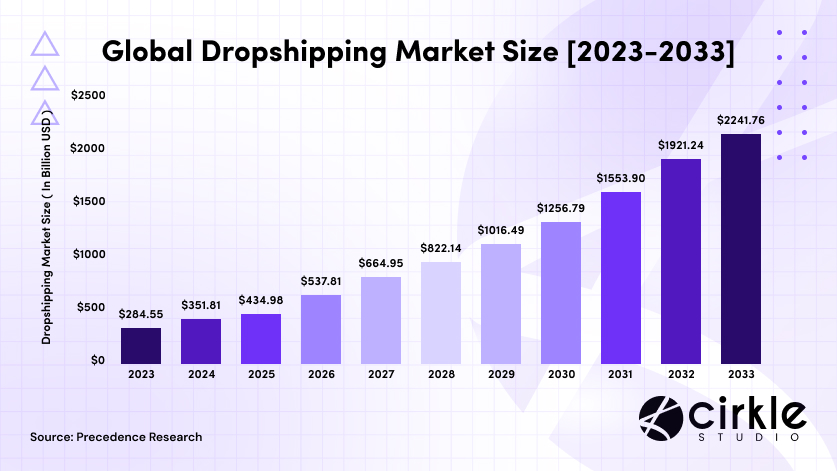
The dropshipping business model has exploded in popularity over the last decade — promising low startup costs, minimal inventory risk, and the flexibility to run an online store from anywhere in the world.
But while it’s easier than ever to start, making consistent profit remains the real challenge. Many beginners underestimate the true costs involved, misprice their products, or fail to account for hidden expenses that quietly eat away at margins.
This in-depth guide will break down how dropshipping profits actually work, explain how to calculate your real costs, and show you exactly how to price your products to achieve sustainable, predictable profits.
1. The Reality of Dropshipping Profit Margins
Let’s start with some truth:
Dropshipping is not a get-rich-quick scheme.
Yes, it eliminates the need to stock inventory or handle shipping, but it also comes with thin margins — especially in competitive niches. The typical profit margin for dropshippers ranges between 10% and 30%, depending on the niche, product quality, and marketing strategy.
Here’s a quick look at the average profit structure:
| Category | Typical Profit Margin | Competition Level |
|---|---|---|
| Tech Accessories | 10–20% | Very High |
| Fitness Products | 20–35% | Medium–High |
| Home & Decor | 25–40% | Moderate |
| Beauty & Skincare | 30–50% | Medium |
| Pet Supplies | 25–45% | Medium |
| Niche/Custom Products | 40–60% | Low–Moderate |
These numbers vary widely, but one truth stands out:
Without a solid pricing and profit analysis, even a successful product can turn into a financial loss.
2. Understanding the Dropshipping Cost Structure
Before setting prices, you must understand every cost that impacts your final profit. Let’s break them down.
2.1 Product Cost
This is what you pay your supplier (on AliExpress, Alibaba, CJ Dropshipping, etc.) for each item.
For example:
-
Product cost: $15 per unit
2.2 Shipping Cost
Sometimes shipping is included (“Free Shipping”), but in reality, it’s built into the supplier’s price or added later.
Example:
-
Shipping: $5 per unit
2.3 Transaction Fees
Every sale goes through a payment gateway like PayPal or Stripe, which usually charge 2.9% + $0.30 per transaction.
Example:
-
Sale price: $39.99 → Transaction fee ≈ $1.47
2.4 Platform Fees
If you’re selling on Shopify, eBay, or Etsy, they’ll take an additional cut or charge a monthly subscription fee.
-
Shopify plan: $39/month
-
Etsy seller fee: 6.5% per transaction
-
Amazon referral fee: 8–15% (category-dependent)
2.5 Marketing & Advertising
The biggest hidden cost of all — especially for dropshippers relying on Facebook Ads, TikTok, or Google Ads.
Example:
-
You spend $10 in ads to get one sale.
2.6 Refunds and Returns
Even if your supplier handles returns, you’ll still lose time and ad spend on customers who request refunds. A 3–5% return rate is common.
2.7 Miscellaneous Costs
-
Domain and hosting: $10–20/month
-
Email tools, apps, and plugins: $30–100/month
-
Virtual assistants or freelancers: varies
When you add it all up, your true cost per sale is often 50–80% of your product’s selling price — or more.
3. The Dropshipping Profit Formula
To make real profit, you must know your numbers cold.
Here’s a simple but powerful formula:
Profit = Selling Price – (Product Cost + Shipping + Fees + Ad Spend + Other Costs)
Example 1: A Basic Calculation
| Item | Amount |
|---|---|
| Selling Price | $39.99 |
| Product + Shipping | $20.00 |
| Payment Fees (3%) | $1.20 |
| Ad Spend | $10.00 |
| Misc. Costs | $1.00 |
| Net Profit | $7.79 |
Profit margin = $7.79 ÷ $39.99 = 19.5%
That’s not bad — but if your ad spend fluctuates or you offer discounts, it can quickly disappear.
Example 2: When Ad Costs Spike
| Item | Amount |
|---|---|
| Selling Price | $39.99 |
| Product + Shipping | $20.00 |
| Payment Fees (3%) | $1.20 |
| Ad Spend | $15.00 |
| Misc. Costs | $1.00 |
| Net Profit | $2.79 |
Now your margin drops to 7% — dangerously thin.
This is why pricing strategy is everything.
4. Setting the Right Price for Steady Profit
4.1 The “3x Rule”
A classic starting point:
Sell your product for at least 3x your total cost (product + shipping).
If your product and shipping cost $20 total → minimum price should be around $59.99.
That gives you breathing room for fees and marketing.
However, this rule is not universal — it depends on your niche, ad strategy, and perceived value.
4.2 Value-Based Pricing
Instead of simply marking up costs, focus on what your product is worth to the customer.
If your lamp offers a unique design, improved material, or emotional value (e.g., gift appeal), you can price higher than competitors — even if your product cost is the same.
The question isn’t “How cheap can I sell this?”
It’s “What is this product worth to the customer’s life or problem?”
High perceived value = higher profit margin.
4.3 Psychological Pricing
American consumers respond strongly to price perception cues.
-
Use $39.99 instead of $40.00 — it feels cheaper.
-
Offer “Buy 2, Get 1 Free” instead of 33% off.
-
Present premium tiers: “Basic – $29.99 / Deluxe – $49.99 / Pro – $69.99.”
Anchoring higher prices next to lower ones boosts perceived value and increases average order value (AOV).
4.4 Bundle Pricing
Selling bundles increases perceived value and profit per transaction.
Example:
-
Product A: $29.99
-
Product B: $19.99
-
Bundle Price: $44.99
Even with a small discount, your ad cost per sale remains the same, but your profit doubles.
4.5 Free Shipping Strategy
Instead of charging shipping separately, include it in your product price.
Customers are far more likely to convert when they see “Free Shipping.”
Example:
Instead of $29.99 + $4.99 shipping, price at $34.99 with free shipping — your margin stays the same, but conversions rise.
5. Advanced Profit Optimization Techniques
5.1 Track CPA and ROAS
If you run paid ads, the two key metrics are:
-
CPA (Cost per Acquisition) = Ad spend ÷ Number of purchases
-
ROAS (Return on Ad Spend) = Revenue ÷ Ad spend
A good benchmark for dropshipping:
-
Minimum ROAS 3x → for every $1 spent, earn $3 in revenue.
-
If your ROAS falls below 2x, you’re likely losing money.
Monitor these metrics daily using tools like Facebook Ads Manager, Google Analytics, or Shopify dashboards.
5.2 Upsells and Cross-Sells
Adding upsells during checkout or post-purchase can dramatically increase profit.
Example:
-
Main item: LED Desk Lamp — $39.99
-
Upsell: Lamp Shade or USB Dimmer — $9.99
If 20% of customers accept the upsell, you add $2 extra profit per sale — pure gain, no additional ad spend.
5.3 Focus on Lifetime Value (LTV)
Instead of chasing one-time buyers, focus on repeat customers.
Use:
-
Email remarketing campaigns
-
Loyalty programs
-
Subscription models (refills, accessories, etc.)
If you can double your customer’s LTV from $40 to $80, your profit doubles — even if margins stay the same.
5.4 Optimize for Conversion Rate
A higher conversion rate (CVR) means more sales for the same ad budget.
Simple website tweaks can improve CVR:
-
Add trust badges (SSL secure, verified seller).
-
Include customer reviews and UGC (user-generated content).
-
Use clear product videos showing real-world use.
-
Simplify checkout (fewer steps = less abandonment).
Every 1% increase in conversion can mean thousands in extra profit over time.
5.5 Negotiate with Suppliers
Many dropshippers overlook this. Once you have consistent volume (even 50–100 orders/month), reach out to your supplier:
“I’ve been working with you for a while — could we discuss a bulk discount or better shipping rates?”
Even a $1 discount per item can significantly boost your margins at scale.
6. Profit Scenarios: Winning vs. Losing
Let’s see how small changes affect your profit.
Scenario A: Poor Pricing Strategy
| Factor | Amount |
|---|---|
| Selling Price | $39.99 |
| Total Cost (incl. ads) | $35.00 |
| Profit | $4.99 |
| Margin | 12% |
| Notes | Price too low; not scalable |
Scenario B: Smart Pricing & Upsells
| Factor | Amount |
|---|---|
| Selling Price | $49.99 |
| Total Cost | $32.00 |
| Upsell Income | $6.00 |
| Profit | $23.99 |
| Margin | 42% |
| Notes | Healthy margin, scalable |
Small changes — higher perceived value, better ad efficiency, and upsells — can completely transform your bottom line.
7. Avoiding Common Profit-Killers
-
Ignoring Hidden Fees – Payment processors, returns, and app subscriptions quietly reduce your margin.
-
Over-reliance on Paid Ads – Diversify traffic: SEO, influencers, email lists.
-
Copying Competitor Prices – You don’t know their cost structure; price based on your numbers.
-
Chasing “Winning Products” Only – Sustainable profit comes from solid systems, not luck.
-
Not Testing Prices – A/B test different price points to find the sweet spot for conversion and margin.
8. Case Study: The Profitable Store Owner
Emily, a small e-commerce entrepreneur, started selling eco-friendly water bottles via dropshipping.
-
Product cost + shipping: $12
-
Selling price: $39.99
-
Average ad spend per sale: $8
-
Net profit per unit: $14
Her first month: 200 sales → $2,800 profit.
Then she introduced:
-
A “2 for $69.99” bundle (boosted AOV).
-
Free shipping over $50.
-
Post-purchase upsell: cleaning brush ($9.99).
Her profit per order jumped to $19, and total monthly profit hit $4,000+ — without increasing ad budget.
The key? Smart pricing and understanding the true cost per sale.
9. The Psychology of Profit Stability
Steady profit isn’t just about math — it’s about consistency and mindset.
• Don’t chase viral trends.
Focus on evergreen products with predictable demand.
• Build brand loyalty.
Consistent customers mean consistent income.
• Automate processes.
Automation tools reduce labor costs and human error.
• Track data relentlessly.
You can’t improve what you don’t measure.
10. The Long Game: From Dropshipper to Brand Owner
Many successful dropshippers eventually transition from reselling to private labeling — creating their own brand, packaging, and exclusive designs.
Why? Because branded products mean:
-
Higher perceived value
-
Better customer loyalty
-
Higher margins (40–70%)
-
Less price competition
Once you understand profit dynamics, moving toward your own brand is the natural next step.
Conclusion: Profit Comes From Precision
Dropshipping success doesn’t come from luck — it comes from math, discipline, and smart pricing.
To ensure stable profits:
-
Know every cost — don’t guess.
-
Price at least 3x product + shipping cost.
-
Track ROAS and conversion rate daily.
-
Use upsells, bundles, and value-based pricing.
-
Focus on LTV, not just first sales.
Profit isn’t what you earn — it’s what you keep.
And in dropshipping, knowing how to price strategically is the difference between a fragile hustle and a sustainable business.