












 En
En
 8 min read
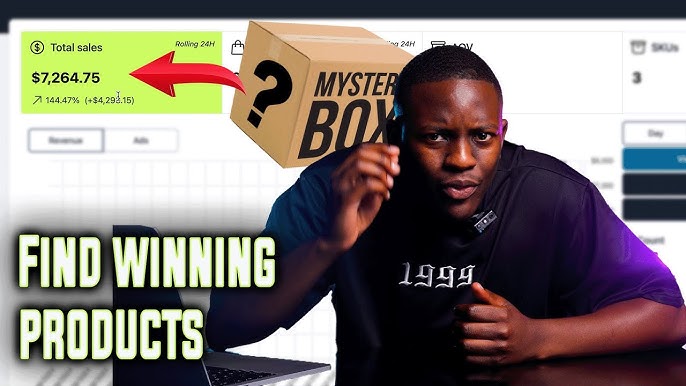
That’s how long it took me to go from a complete beginner—no ecommerce background, no prior sales—to launching my first winning product and seeing consistent daily orders.
I didn’t have insider connections.
I didn’t have a huge budget.
And I definitely didn’t rely on luck.
What I did have was a clear process, the right product research tools, and the discipline to trust data over emotion.
In this article, I’ll walk you through exactly how I did it, step by step. No hype. No “overnight success” nonsense. Just a realistic breakdown of how beginners can use modern selection tools to dramatically shorten the learning curve—and avoid the costly mistakes I nearly made along the way.
1. Where I Started: Zero Experience, Maximum Confusion
When I first entered ecommerce, I was overwhelmed.
Everywhere I looked, people were saying:
-
“Just follow your passion”
-
“Pick what you like”
-
“Copy what’s trending on TikTok”
None of that helped.
I spent my first few days doing what most beginners do: scrolling endlessly through product catalogs, convinced that a “winning product” would somehow jump out at me.
It didn’t.
What I saw instead were:
-
Overcrowded markets
-
Identical products everywhere
-
No clear way to tell what actually sells
That’s when I realized something important:
The biggest enemy of beginners isn’t competition—it’s randomness.
2. The Turning Point: Stop Guessing, Start Measuring
Around day five, I made a decision that changed everything:
I stopped trying to feel my way to a product and started measuring demand instead.
That meant learning how to use product research tools—not as magic buttons, but as decision filters.
My new rule became simple:
If I can’t prove demand with data, I don’t touch the product.
This mindset shift alone saved me weeks of wasted effort.
3. My Core Strategy: One Market, One Problem, One Product
Before touching any tools, I narrowed my focus.
I didn’t want:
-
A massive catalog
-
Multiple niches
-
Complicated branding
I wanted one product that solved one clear problem.
So I set three rules:
-
The product must solve a visible, relatable problem
-
Demand must already exist (I wasn’t here to educate the market)
-
The product must be easy to explain in under 10 seconds
This framework guided every tool I used afterward.
4. The Tools I Used (and How I Actually Used Them)
Let’s be clear: tools don’t find winning products—people do. Tools simply reduce noise.
Here’s how I used mine.
4.1 Marketplace Analytics Tools: Finding Proven Demand
I started with marketplace data, focusing on:
-
Best-seller lists
-
Rapidly growing categories
-
Products with steady reviews over time
What I looked for:
-
Consistent sales velocity
-
Reviews spread over months (not one viral spike)
-
Clear problem-solution alignment
If a product was selling well without aggressive branding, that was a good sign.
4.2 Search Trend Tools: Validating Long-Term Interest
Next, I checked search trends.
I wasn’t looking for:
-
Explosive spikes
-
Seasonal-only demand
I wanted stable or gradually rising interest.
Key signals:
-
Multi-month upward trends
-
Problem-based keywords
-
Low volatility
This step eliminated 60% of products that looked good on marketplaces but had no long-term search interest.
4.3 Ad Creative Libraries: Understanding Market Psychology
This step was critical.
I studied:
-
Existing ads for similar products
-
Messaging angles
-
Visual hooks
-
Comment sections
What I wanted to know:
-
What pain points are people reacting to?
-
Are customers confused or excited?
-
Are brands selling benefits or features?
If multiple advertisers were testing different angles, that told me the product had room for optimization.
5. The Product Filtering Checklist I Followed Religiously
Before moving forward with any product, it had to pass all of these filters:
Demand Filters
-
Existing sales proof
-
Search interest beyond one platform
-
Clear user intent
Competition Filters
-
No brand monopoly
-
No overly complex IP issues
-
Room for differentiation in messaging
Operations Filters
-
Simple fulfillment
-
No fragile parts
-
Easy customer understanding
Most products failed here—and that was a good thing.
6. The Moment I Found “The One”
On day 14, I found a product that felt… different.
Not exciting at first glance.
Not flashy.
Not trendy.
But the data told a compelling story:
-
Moderate but consistent demand
-
Weak branding from competitors
-
Customers clearly frustrated with existing solutions
More importantly, I could explain the product’s value in one sentence.
That’s when I stopped searching.
7. Validation Before Commitment: The Step Most Beginners Skip
Instead of rushing to launch, I validated further.
I:
-
Read every negative review in the category
-
Looked for repeated complaints
-
Checked return reasons
-
Analyzed unanswered questions
This helped me shape:
-
Product positioning
-
Messaging
-
Expectations
I wasn’t trying to invent a new product—just a better presentation of an existing solution.
8. Building the Offer, Not Just the Product
Here’s a beginner mistake I avoided:
I didn’t sell a product.
I sold a solution bundle.
That included:
-
Clear use instructions
-
Before/after explanation
-
Problem-first messaging
-
Simple guarantees
Most competitors just listed features. I focused on outcomes.
9. Launch Week: What Actually Happened
I launched quietly.
No big influencers.
No massive ad spend.
Just:
-
One clean product page
-
One core audience
-
One primary ad angle
Results:
-
First sale within 24 hours
-
Consistent daily orders by day 4
-
Feedback validating the problem-solution fit
Was it explosive? No.
Was it sustainable? Yes.
10. Why This Product Worked (and Others Didn’t)
Looking back, the product succeeded because:
-
It solved a real, recurring problem
-
Demand existed before I arrived
-
Competition was lazy, not unbeatable
-
Tools confirmed what intuition alone couldn’t
Most importantly, I didn’t rush the selection process.
11. Common Beginner Mistakes I Now Avoid Completely
After this experience, I stopped doing the following:
❌ Chasing viral products
❌ Copying random TikTok trends
❌ Falling in love with “cool” ideas
❌ Ignoring negative reviews
❌ Launching without validation
Tools don’t remove risk—but they drastically reduce blind risk.
12. How Long the Process Really Took
Here’s the honest breakdown:
-
Days 1–5: Learning and filtering noise
-
Days 6–13: Tool-based research and elimination
-
Days 14–18: Deep validation
-
Days 19–25: Setup and positioning
-
Days 26–30: Launch and optimization
No shortcuts—but no wasted motion either.
13. The Psychological Shift That Changed Everything
The biggest change wasn’t technical—it was mental.
I stopped asking:
“Will this product work?”
And started asking:
“What does the data say about risk?”
That shift alone made product selection calmer, faster, and far more objective.
14. Can This Be Repeated?
Yes—but not mechanically.
Tools don’t give answers.
They give signals.
Your job is to:
-
Interpret patterns
-
Connect data points
-
Apply human judgment
That’s why copying someone else’s “winning product” rarely works—but copying their process often does.
15. What I’d Do Differently Next Time
If I were starting again:
-
I’d trust data earlier
-
I’d eliminate products faster
-
I’d spend more time on messaging than sourcing
-
I’d stop overthinking originality
Originality is overrated. Clarity wins.
16. Advice for Beginners Starting Today
If you’re just starting out, here’s my honest advice:
-
Don’t aim for “the best product”
-
Aim for the clearest opportunity
-
Let tools guide decisions, not ego
-
Fall in love with the process, not the product
Your first win isn’t about money—it’s about proof.
17. From First Win to Scalable System
That first winning product gave me:
-
Confidence
-
Cash flow
-
A repeatable framework
Everything that came after was easier because I had evidence, not theory.
Conclusion: Tools Don’t Replace You—They Empower You
Going from beginner to bestseller in 30 days wasn’t luck.
It was the result of:
-
Structured thinking
-
Data-backed decisions
-
The right tools used the right way
If you’re overwhelmed, stuck, or discouraged, remember this:
Winning products aren’t discovered by scrolling harder.
They’re uncovered by filtering smarter.
And once you experience that first win, everything changes.